
Best Natural Remedies to Calm Inflamed Skin
Have you ever woken up with red, angry skin and had absolutely no idea what triggered it? Same. Whether it’s a new product, stress, or just your skin being dramatic, inflamed skin is frustrating — and it happens to the best of us. The good news? Your kitchen and bathroom cabinet probably already hold some of the best solutions. Let’s talk about the most effective natural remedies for inflamed skin you can try today.
1. Use Natural Remedies for Inflamed Skin Starting with Aloe Vera
Aloe vera is basically the MVP of home remedies for irritated skin. Its gel contains compounds that actively reduce redness and cool the skin on contact. You can use fresh aloe straight from the plant or pick a pure gel from your local store — just make sure it’s free of alcohol and synthetic fragrance. Apply it as a thin layer on the affected area and let it absorb fully. It works especially well after sun exposure or a bad reaction to a new product.

2. Try a Cold Oatmeal Compress to Soothe Red Skin Naturally
Colloidal oatmeal has been used for centuries to soothe red skin naturally, and dermatologists still recommend it today. It forms a protective barrier on the skin and helps reduce the urge to scratch. You can blend plain oats into a fine powder, mix with cool water, and apply it as a paste or compress. Leave it on for 10–15 minutes, then rinse gently with lukewarm water. It’s one of the gentlest anti-inflammatory skin remedies out there, even for babies and kids.
3. Apply Raw Honey for Calm Sensitive Skin
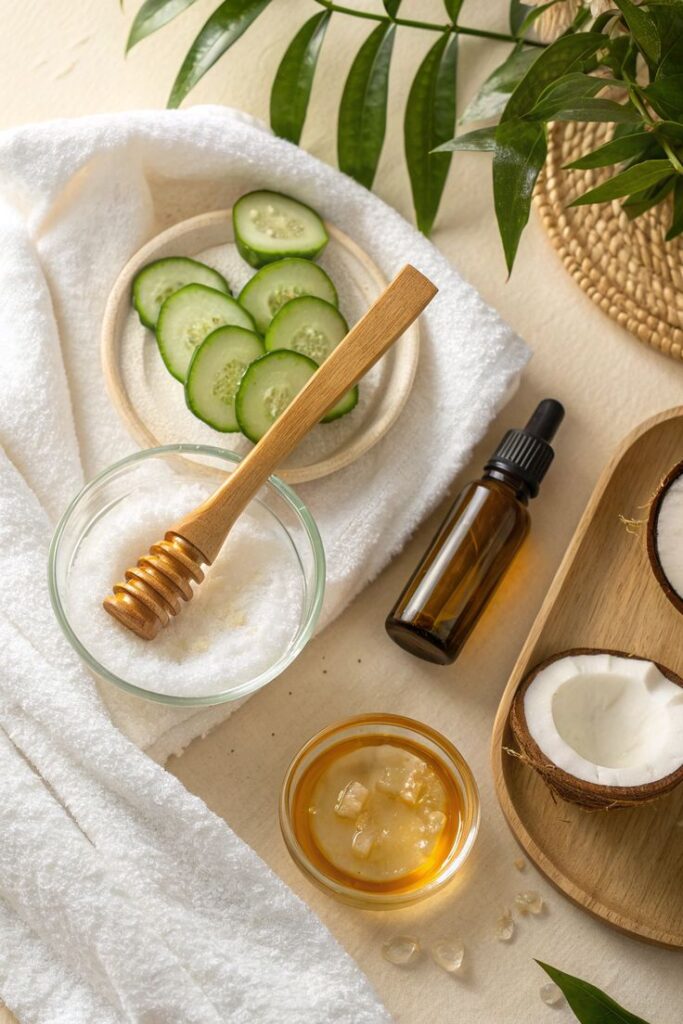
Raw honey is loaded with natural enzymes and antioxidants that help calm sensitive skin tips-worthy conditions like eczema flares or contact dermatitis. It also has mild antibacterial properties, so it’s great when inflammation comes with a little breakout. Dab a thin layer on clean skin, wait 15–20 minutes, and rinse with warm water. Make sure you’re using raw, unprocessed honey — the regular kind from the supermarket shelf is too refined to be as effective. Manuka honey, in particular, is considered one of the best anti-inflammatory ingredients for reactive skin by beauty experts.

4. Reach for Cucumber Slices or Cucumber Water
Cucumbers are mostly water, and that’s exactly what makes them so effective. They cool inflamed tissue fast, reduce puffiness, and deliver a light dose of vitamin K and caffeic acid — both known for reducing swelling. Slice them thin and place directly on irritated skin, or blend them with a little aloe for a DIY mask. It’s one of the easiest home remedies for irritated skin that requires zero prep time. Keep slices in the fridge for an extra-cooling effect.
5. Use Chamomile Tea Bags as a Natural Compress
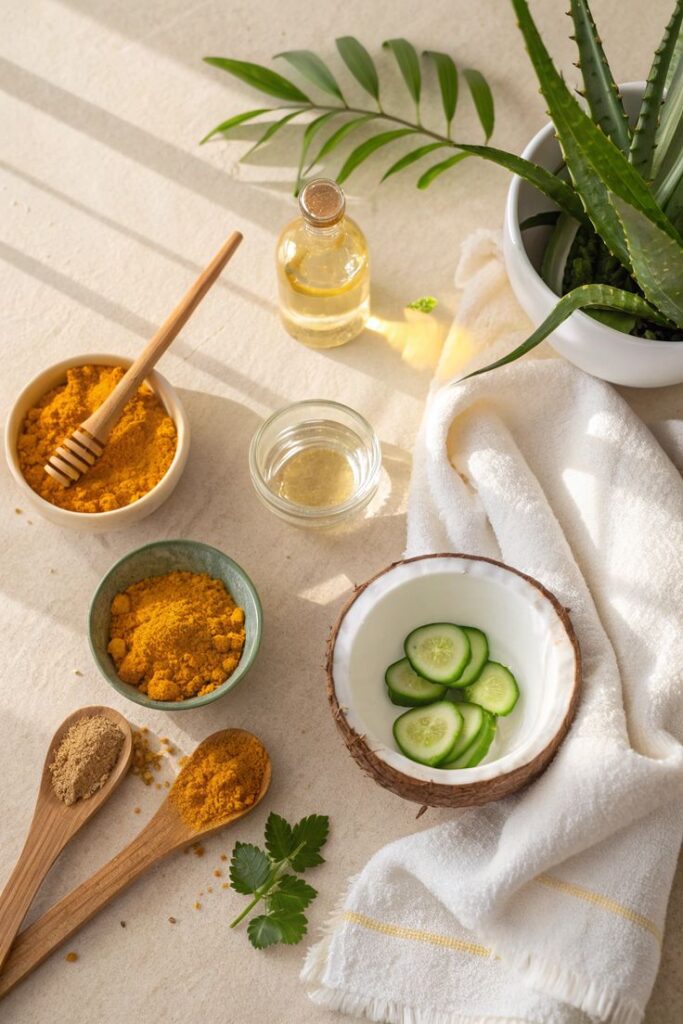
Chamomile is one of the most underrated anti-inflammatory skin remedies hiding in your pantry. Brew two bags, let them cool completely in the fridge, then press them gently against the inflamed area. The antioxidants in chamomile — especially bisabolol and apigenin — actively work to reduce redness and calm the skin barrier. It’s a go-to trick for calming flare-ups around the eyes or cheeks. If you want to learn how to build a full gentle routine around ingredients like this, check out my complete guide to soothing sensitive skin at home.
6. Apply Diluted Tea Tree Oil Carefully 🌿
Tea tree oil is powerful, so it must always be diluted before you put it anywhere near your skin. Mix 1–2 drops with a tablespoon of coconut or jojoba oil before applying. It’s particularly effective when inflammation is linked to a bacterial cause or clogged pores. Don’t use it on open wounds or severely cracked skin. When used correctly, it’s one of the more targeted natural remedies for inflamed skin for spot-treating problem zones.
7. Protect Your Skin Barrier with Facial Oils
Sometimes inflamed skin just needs nourishment, not treatment. Oils like rosehip, sea buckthorn, and squalane help restore the lipid barrier that keeps irritants out and moisture in. A compromised barrier is often the root cause of recurring redness, so sealing it with a gentle facial oil after cleansing can make a real difference. Look for cold-pressed, unrefined versions for the most active nutrients. If you’re unsure which oils work best for your skin type, my guide to spring skincare transitions breaks it all down beautifully.
8. Adjust What You Eat — It Matters More Than You Think 🥗
What you put in your body shows up on your skin. Anti-inflammatory foods like turmeric, green leafy vegetables, omega-3-rich fish, and berries can significantly help reduce internal inflammation that manifests as skin redness or flares. Cutting back on sugar and processed foods makes a visible difference for many people within just a few weeks. Hydration is equally important — dehydration makes the skin more reactive and prone to redness. Think of this as one of the most impactful calm sensitive skin tips you can act on right now.
Wrapping Up
Dealing with inflamed skin doesn’t have to mean an expensive trip to the dermatologist — at least not right away. Starting with simple, natural remedies for inflamed skin like aloe vera, oatmeal, honey, and chamomile can make a noticeable difference in a short time. The key is consistency and gentleness. Try one or two of these and see what your skin responds to best. Have a favorite remedy I didn’t mention? Drop it in the comments — I’d love to know what works for you! 💚